Why Modular Construction Reduces Build Delays
Modular construction offers more predictable timelines because much of the work happens in a controlled environment.
share
Date Published
3.26.26
Illustration
construction speed home planning housing innovation offsite building property timeline home project build process real estate modular design home delivery
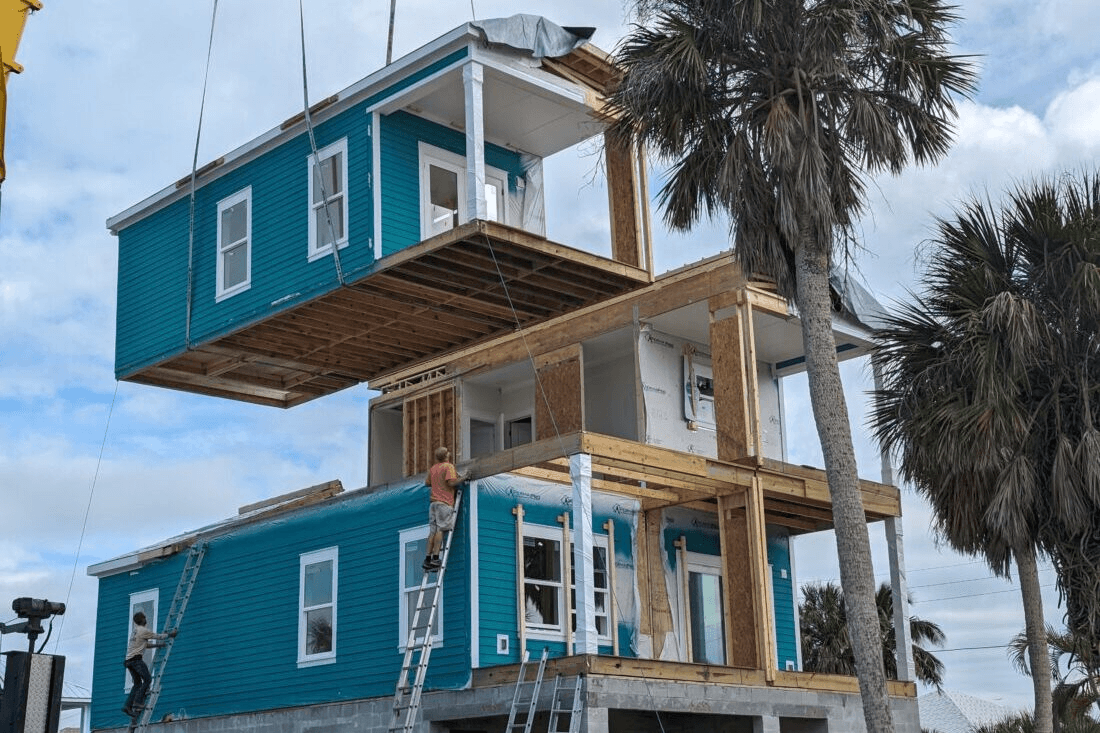
One of the biggest frustrations in traditional construction is delay. Weather, labor shortages, and supply chain issues can extend timelines well beyond what buyers originally expected.
Modular construction approaches the process differently, which helps create more consistency from start to finish.
Controlled Building Environment
Modular homes are built indoors in a controlled setting. This allows construction to continue regardless of weather conditions, which eliminates one of the most common causes of delay in traditional homebuilding.
Because materials are stored on-site and protected, there is also less risk of damage or replacement due to environmental exposure.
Parallel Construction Timelines
Another advantage of modular construction is that site preparation and home construction can happen simultaneously.
While the foundation is being completed on-site, the home itself is already being built in sections. This overlap significantly shortens the overall timeline compared to traditional sequential construction.
Fewer Scheduling Conflicts
Because modular construction uses a consistent production schedule, there are fewer unknowns tied to subcontractor availability.
This helps create clearer expectations for completion and allows buyers to plan move-in dates with more confidence.
A More Predictable Process
No construction process is completely free from variables, but modular building reduces many of the most common sources of delay.
For buyers, this means less uncertainty and a clearer path from design to completion.